March 6, 2025
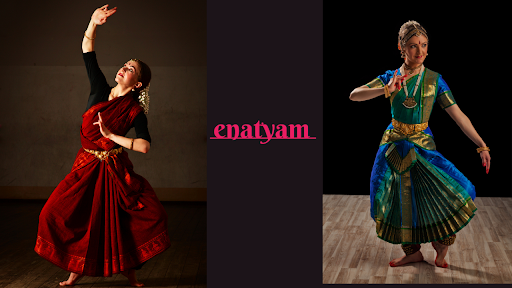
Bharatanatyam is not just a dance; it is a visual poetry written with the body. Originating from the temples of Tamil Nadu, this ancient Indian classical dance form is a rigorous discipline that demands balance, strength, and an unbreakable connection with the earth.
Bharatanatyam demands physical discipline, emotional depth and grace. It is famous for its movements and there are a lot of emotions and feelings in Bharatanatyam that you have to feel in every step. When you practice this dance, you have to be very careful with your body position. The dance looks effortless, but there’s a kind of power and smoothness in every move that’s hard to miss. Watching a skilled dancer, you get the sense that each gesture means something, and that feeling pulls you in.
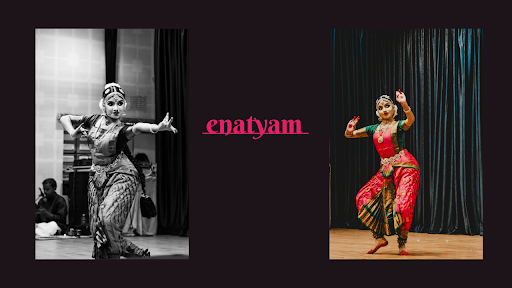
A Bharatanatyam performance has three elements that make it work – Nritta, Nritya, and Natya. Nritta (rhythmic elements) is about moving to the rhythm and Nritya (combination of rhythm and expressions) is when you add feelings to the rhythm in Bharatanatyam. Then there is Natya (dramatic element) which’s the storytelling part of Bharatanatyam, it makes the story come alive with drama in Bharatanatyam. The postures you see in Bharatanatyam are a part of the Nritta, in Bharatanatyam, they help give Bharatanatyam its structure and make it strong.
This old style of dance is really connected to God and people often do it for Lord Shiva, who is an embodiment of dance, in the universe. The spiritual part of it is said nicely in the old saying that people who do Bharatanatyam dance say:
“Aangikam Bhuvanam Yasya
Vachikam Sarva Vaanmayam
Ahaaryam Chandra Taaradi
Tam Vande Sattwikam Shivam”
It means, “We bow to Him the benign One, whose limbs are the world, whose music and poetry are the core of all language, and whose garment is the moon and stars.”
This shloka reminds dancers that Bharatanatyam is not just a physical practice, but a sacred union of movement, expression & devotion.
You must focus on these five core postures to master the technical precision of Bharatanatyam.
Let’s learn them in detail.
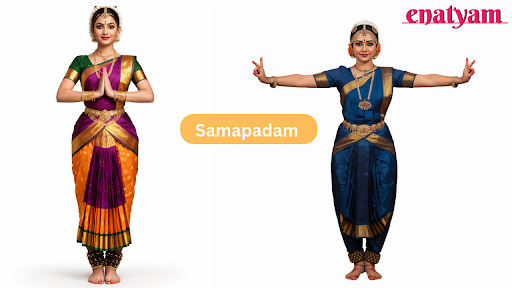
Samapadam is the basic and simplest posture in Bharatanatyam. Once you get into the Samapadam position, your body has to stay still and balanced. Samapadam looks easy when you see it but it is really important as start and rest position for many sequences in Bharatanatyam.
In Samapadam, you put your feet together with no space between them. As the name suggests “Sama” means equal and “padam” means feet. Your body weight is spread out evenly so you do not lean to one side. This helps you stay balanced. You should keep your back straight and your body should look normal, it should not be too stiff or too relaxed.
To make this posture, the hands are at the waist in Ardha Chandra Hasta. This is also called the half-moon style. The thumbs are up and the fingers are curved a little. This makes the hands look neat and controlled. This hand position remains consistent in several other Bharatanatyam postures as well.
The chin is a bit bent down, about an inch so the neck can stay relaxed. The eyes look ahead, which helps the upper body and the lower body of the person stay in a good position. Proper alignment of the upper body and the lower body is very important to avoid feeling tense.
Samapadam teaches stillness, posture awareness, and body symmetry. A dancer who masters Samapadam develops better control over transitions and maintains grace even during pauses in a performance.
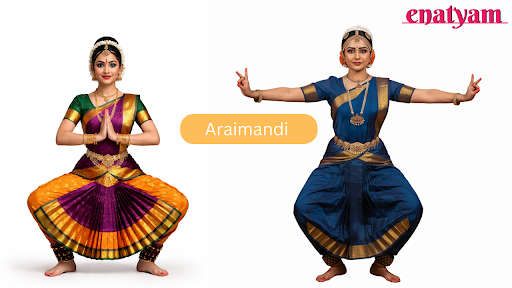
Araimandi is the iconic posture of Bharatanatyam that creates a signature diamond shape with the legs. It is the base for almost every movement in the dance.
The dancer moves the feet apart and toes are pointing outward. They need to keep the heels about three fingers apart. This is important because the dancer needs to put their body weight on both feet. If they do this, they will be able to maintain their balance. They must make sure the body weight falls equally on both feet.
When you are practicing, your knees need to be bent outward so you are in a seated position. It is really important that your knees and toes are aligned all the time. You have to keep your spine straight and make sure you do not hunch or lean forward with posture and remember your knees and toes must remain aligned.
The hand position is the same as it’s in Samapadam posture. It rests at the waist in Ardha Chandra Hasta mudra. This helps keep overall position balanced and makes sure you stay disciplined and maintain symmetry when you do Ardha Chandra Hasta and Samapadam.
Araimandi is a posture that needs strong legs, core stability and a lot of flexibility. When you are just starting to learn, it can be really hard to get into this position. But if you keep practicing, you will get better at it and it will not be so tough.
If your knees and toes are not lined up right, it can hurt your knees, hips and lower back. That is why it is so important to make your basics stronger and be more flexible so you can do Araimandi safely.
A strong Araimandi posture gives Bharatanatyam its sharpness, stability, and powerful visual appeal.
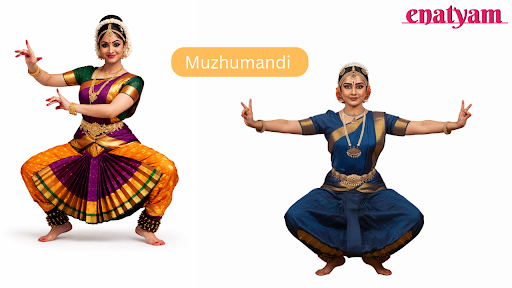
Muzhumandi is basically an extension of Araimandi posture. “Muzhu” means full and “Mandi” means sitting. This posture represents the full sitting position and it is really demanding. It requires a lot of strength and balance and control. You need to be advanced to do Muzhumandi as it demands more from you than poses.
When you do Araimandi, you need to bend your knees more, which makes your body go down into a full squat. Your knees should always be facing outward like they are supposed to be symmetrical and they should never point forward. Now Araimandi is different from Muzhumandi because in Muzhumandi, you lift your heels up a bit and your body weight is on your heels.
When you are standing, your spine needs to be up and your torso should stay up too. Your hips should not go back. Balance is really important when you are in this position.
The hands stay at the waist in Ardha Mandala Hasta. This is the half-moon style that we use in Samapadam and Araimandi. You should keep the hands in this position to make sure everything stays together and looks good in all the postures. This way, Ardha chandra Hasta and other postures, like Samapadam and Araimandi look nice and balanced.
Muzhumandi builds exceptional leg strength and stamina. It is often used in strong rhythmic sequences and dramatic moments within a performance. When executed correctly, it adds depth and intensity to the dance. Because it places pressure on the knees and ankles, proper warm-up and gradual practice are essential.
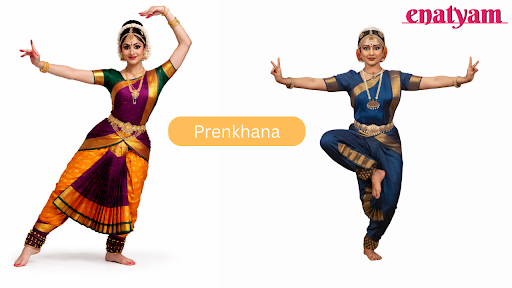
Prenkhana is a common Pada Bhedas or leg posture that people use in Bharatanatyam. Prenkhana is performed with hand movements, it is called a Mandala Bheda and is often introduced during the Natta Adavu. The Prenkhana posture brings movement and rhythm to the dance. It helps the dancer move away from staying in one place and being still. The Prenkhana posture is all about movement and rhythm in Bharatanatyam.
To do Prenkhana, the dancer taps their leg and stays balanced at the same time. They keep one leg on the ground so it does not move and the other leg is on its heel. The Prenkhana dance is all about balance and the performer has to be careful to keep their balance while tapping the right leg.
The posture is done with hand movements. The right hand is raised up at a 45-degree angle above the shoulder level in Tripataka Hasta. This is how it is usually done. The exact placement of the hand may be different depending on the choreography of Tripataka Hasta but the posture of Tripataka Hasta remains the same.
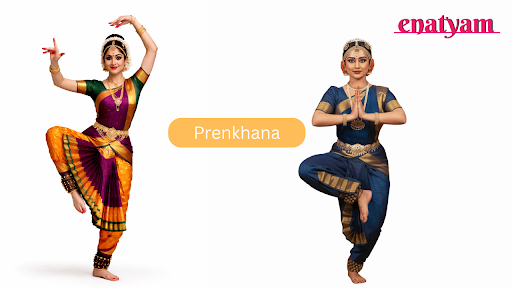
Eka Pada is a posture that really shows how good you are at balancing and being in control. The term “Eka Pada” means you are standing on “one foot.” Eka Pada can look different depending on how you do it.
When you perform Eka Pada in a static position it is called Sthana and when you do the same Eka Pada with a turn or spin, it is known as Bhramari.
In Eka Pada, the performer has to stand on one leg. They have to keep this leg straight and make sure it is stable. The other leg goes across the knee of the leg that is standing. The knee of the leg that is crossed over has to be bent and opened up so that it points to the side. You have to make sure your body is in the position and your core is working properly to stay balanced in Eka Pada posture.
The Brahma posture is something that people use to show symbolic characters. This posture is often used when someone is sitting down in a lotus inspired position. The Brahma posture shows that someone is stable, wise and very calm.
Eka Pada strengthens the legs, ankles, and core muscles. It also improves focus and body awareness. Maintaining drishti, or focused gaze, plays an important role in holding this posture steadily.
When you read classical texts, like the Abhinaya Darpana, you find out that a Bharatanatyam dancer needs to have some special qualities to do the postures just right. The Abhinaya Darpana talks about these qualities in a verse that says:
“Javaha Sthiratwam Rekha cha
Bhramari Drishti Shramaha
Medha Shraddha Vacho Geetham
Paathra Praanaa Dasha Smruthaha”
Each quality has a lot of meaning to it and has deep significance.
Bharatanatyam dance postures are more than the way you stand or sit. They are a way of communicating that uses rhythm, emotion and devotion. Bharatanatyam postures like Samapadam which’s very still, Araimandi and Muzhumandi which show strength. Prenkhana posture is all about movement and Eka Pada is all about balance. Each Bharatanatyam posture is important for a dancer to learn. It helps them on their journey to become a good dancer.
Mastery of these Bharatanatyam dance postures takes time, patience, and sincere practice. When performed with correct technique and inner awareness, they transform Bharatanatyam into a powerful and timeless art form.
If you wish to deepen your understanding and perfect these essential postures, exploring structured online dance classes can help you learn under expert guidance. Join professional Bharatanatyam training through online dance classes and take a confident step forward in your classical dance journey.